
 Nutrition


I believe to fix problems, we must find the underlying root cause, then, based on the findings, make the necessary changes to solve the problem. I believe that our health problems, started back in the 1800s when Samoa was colonised by the Germans, then Britain and finally passed on to New Zealand. Prior to colonisation we lived off the land and sea farming chickens, pigeons, pigs, goats, ducks, taro, banana, yams, and ta’amu to name a few. Fishing was massive as well. We were literally living on pure organic food and people were strong and fit from working hard on their daily routines.
The influx of cheap imported food soon followed - turkey tails, lamp flaps, salted beef, white flour, and sugar. Our people had a natural liking of these imported food products and soon developed our own unhealthy creations - pancakes, kopai, keke puaa, german buns, and siamu popo (jam) made by frying sugar to melt and add coconut cream. Even though most of these imported products are expensive today, we still buy them because we are “addicted” to them.
When our belief that “Big” is strong, wealthy and beautiful, is fuelled by cheap imported food, there are serious health consequences for our wonderful people.
We have also added imported food to our Cultural Ceremonies or gatherings such as Village Chief Title bestowment, Village penalties, Village gifts, funerals, weddings and opening a new church building and many others.
Today Samoans and pacific people are seen as “Big People.” Last year scientific research done in New Zealand found that a gene was a factor that could potentially contribute to obesity for people of Polynesian heritage. While I cannot dispute the findings of this research, it is important to note that this accounts for less than 5% of our weight problems. Clearly Samoan life-style, particularly the cultural way be use food, is responsible for disturbing declines in our health. Obesity was not a significant problem in the early days of colonialism, but it certainly is today.
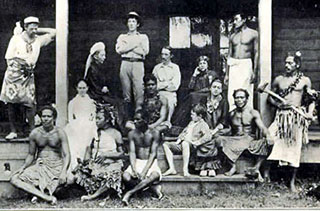
Our Island was first discovered in the early 18th century by a Dutch man, this was the beginning of the colonisation of our Islands. This was the introduction of processed food to Samoa. During the migrations of the war ships at that time, they carried easy to consume items, like corned beef, as this was a popular way to store meat to consume while at sea. Food stuff also a popular commodity for trade. This was the genesis of interest with canned food, corned beef and tin fish, into our Fa’a Samoa lifestyle. It did not take long for our people to enjoy these foreign produced products as they were affordable and easy to prepare.
In these early days, an obese person was seen as wealthy, because of having the capacity to buy imported food. You were seen as strong and healthy compared to skinny or toned people who were thought to be starving. People began to believe that “Big is Beautiful!” I do not disagree but it would be wonderful if we could be BIG and Strong so we can enjoy our beautiful selves later in life.
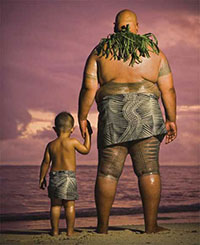
The impact of imported food on Samoan culture is unmistaken. The negative impact has certainly been felt, inter-generationally as well. Neither is it limited to the island of Samoa. Samoans living abroad also suffer the same fate. “Big is beautiful” has been encouraged, albeit unknowingly sometimes, wherever Samoans congregate. This is true of Samoans in America, Australia, and New Zealand, where the implicated ‘imported foods’ are now readily available. Not only are McDonald’s and KFC affordable, but they are everywhere and accessible.
In the early stages of the foreign discovery of Samoa, our people did not suffer from obesity. There are a variety of reasons for that, but the one constant was imported food items. In this case, the lack thereof. The locals worked the farms, crops at the plantation or fishing. We were not big, until we discovered the outside world and its food. Corned beef, was one of the foods that navigators used as it could be stored and eaten at will. In war times, soldiers also utilized these food items. It was also a commodity for trade with island nations.
Another factor was the affordability of these imported food items. The economic impact was easy to deduce but insidious weight gain began to take its toll and the “Big is beautiful” trend emerged.


